|
Advent’s third Sunday, Gaudete Sunday, dares the church to rejoice even when the world feels anything but joyful. But how do we rejoice when the world seems so troubled; when suffering persists, when justice seems delayed, when the promises of God feel distant? Our world is marked by anxiety, violence, economic uncertainty, illness, and personal struggles. Can joy, therefore, be anything more than a fleeting emotion or feeble optimism?
The readings for this Third Sunday of Advent in Year A speak powerfully to this tension between promise and fulfillment, between hope and reality, between what we long for and what we can see.
0 Comments
The Second Sunday of Advent continues our journey of anticipation and hope. It invites us to listen carefully to two powerful voices from Scripture—Isaiah’s poetic vision of a renewed world and John the Baptist’s call to repentance in the wilderness. Together, they proclaim a single message: God is coming, and we must prepare our hearts to welcome Him.
The First Sunday of Advent ushers in a sacred time of waiting—a waiting that is not passive or anxious, but rich with expectation and faith. As we light the first Candle of Hope, we are reminded that hope is not mere optimism or wishful thinking; it is the steady flame that keeps our hearts awake to God’s promises even in the midst of darkness and uncertainty. Biblical hope is active, confident expectation that is rooted in God's faithfulness.
"¡Viva Cristo Rey!” “Long live Christ the King”
I want to share the story behind this phrase that has echoed through history: "Viva Cristo Rey!" – "Long live Christ the King!” These words became the rallying cry and final testimony of Mexican martyrs during the Cristero War of the 1920s. This was a time when the Mexican government attempted to suppress the Catholic Church, closing churches and executing priests, thousands of faithful Catholics, many of them simple farmers and laypeople as well a clergy, took up arms to defend religious freedom. As they faced firing squads, their last words were often this defiant proclamation: "Viva Cristo Rey!" Among them was a 14-year-old boy, Saint José Sánchez del Río, who was tortured and killed in 1928. As soldiers cut the soles of his feet and forced him to walk through the town, he cried out "Viva Cristo Rey!" With his last breath, as they prepared to shoot him, he shouted these words one final time. These weren't words of hatred or revenge, they were ultimate words of witness, declaration that no earthly power could separate them from their true King. This cry reminds us that proclaiming Christ as King has always been, and remains, a revolutionary act. Rejoice!
In the midst of a penitent season the Church call us to rejoice. Why? Because of Emmanuel: God with us. In the first reading from Isaiah 35:1-6a,10 we hear Here is your God, he comes with vindication; with divine recompense he comes to save you. Emmanuel: God with us. I was reading the Holy Father's words for this Gaudete Sunday and he says “Advent, then, is a time for overturning our perspectives … for letting ourselves be surprised by the greatness of God’s mercy,” Yes indeed. Last week I shared with a group a zoom presentation on advent and the experience of longing and I said "I am aware of my sinfulness but Advent calls me to re-discover my saintliness" and we can do so if we as Pope Francis says we ourselves be surprised by the greatness of God’s mercy. John the Baptist needed to re-discover his saintliness while he was in prison and knowing that he was certainly going to die there. He was the voice in the wilderness crying 'prepare the way of the Lord', he was the prophet who proclaimed 'behold the Lamb of God', he was the one who baptized Jesus but now in prison doubt invaded his mind and he sent his disciples to Jesus with a question "Are you the one who is to come, or should we look for another?" Gaudete John! Jesus response was the affirmation of Isaiah's prophecy: "Go and tell John what you hear and see: the blind regain their sight, the lame walk, lepers are cleansed, the deaf hear, the dead are raised, and the poor have the good news proclaimed to them. And blessed is the one who takes no offense at me." Pope Francis speaking about John said, “even the greatest believer goes through the tunnel of doubt.” “And this is not a bad thing; on the contrary, sometimes it is essential for spiritual growth: it helps us understand that God is always greater than we imagine him to be” It is applicable to us today as we too often enter that tunnel of doubt. Gaudete in Domino semper (Rejoice in the Lord Always): Emmanuel (God is with us) in every circumstance in our lives. God is with us on the mountaintop, in the dark valley. Like John the Baptist let us heed the words of Isaiah "Strengthen the hands that are feeble, make firm the knees that are weak, say to those whose hearts are frightened: Be strong, fear not!" 'Guadete!' is a Latin imperative, a command. I pray that we all rediscover our saintliness this Advent. Peace, Deacon Michel Twenty-fourth Sunday in Ordinary Time
Reading I. Is 50:5-9a Reading II. Jas 2:14-18 Gospel Mk 8:27-35 If today was a celebrated feast of the Church it should be called 'Rubber meets the Road' Sunday. Let me explain. In our first reading from the prophet Isaiah we get a glimpse of the Suffering Servant who is beaten, beard plucked, buffeted and spat upon but will not rebel against his God who sent him but rather declares "The Lord GOD is my help, therefore I am not disgraced;I have set my face like flint, knowing that I shall not be put to shame." Jesus greatly Identified his mission with the prophecies of Isaiah and it is on this occasion that it was 'rubber meets the road' time for his disciples; two questions: Who do people say that I am?” “But who do you say that I am?” The 'but' at the beginning of the second questions indicated that a different answer was expected between 'the people' and 'YOU' (disciples), "You are the Christ" Peter responded, only to show later on that he did not link "the Christ" with the Suffering Servant. This lead to Jesus' discourse on faith and discipleship. Faith requires a complete change of mindset. Peter is scolded for "thinking not as God does, but as human beings do.” Discipleship requires “Whoever wishes to come after me must deny himself, take up his cross, and follow me." Deny him/herself - this means to think/love like God, which is loving and serving others not ourselves. We live in a society of self absorption and that has been the root cause of all that plagues us. I swear there are many people who will run out of letter 'I's in their lifetime; that's all they speak of. Take up the Cross - I've often had to preach "a Christian without a Cross...ain't". We would rather hear prosperity gospels and blessings of thousand-fold rewards rather than the cross. I don't like suffering, I don't do it well but if 'the Christ' didn't deny his own cross then who am I? I have to place my trust in the Father's love as he did. Follow me - yes, it means to copy his example but it also literally means to stay behind him as HE leads. Jesus does not send us out where he would not go or not be with us Discipleship requires faith just as faith produces discipleship quite like James 'faith' and 'works' we heard in the second reading. They are not mutually exclusive. F.A.I.T.H ‐ Forsaking All I Trust Him. But who do you say that I am? The answer changes everything. Happy 'Rubber meets the Road' Sunday. Peace. The Solemnity of Our Lord Jesus Christ, King of the Universe Reading 1 - DN 7:13-14 Reading 2 - RV 1:5-8 Gospel - JN 18:33B-37 The world was vastly changed and still changing in 1925. Not yet 10 years removed from the end of the first World War, the Communist Revolution in Russia and a rise in the nationalistic right wing nationalism propaganda in parts of Europe. In the light of all this, Pope Pius XI looked at the centrality of Christ and established the Solemnity of Christ the King of the Universe. In the New World, in neighboring Mexico, the President, Calles and his Administration, sought to suppress the power and influence of the Catholic Church and in 1926 the Cristero War began with its marching slogan 'Viva Cristo Rey!' (Long live Christ the King!). over 50,000 men, women and children would be killed before the termination of the suppression in 1929. Thirty-first Sunday in Ordinary Time
Lectionary: 152 Reading 1: DT 6:2-6 Reading 2: HEB 7:23-28 Gospel: MK 12:28B-34 "You are not far from the kingdom of God." Jesus said to the scribe and with this declaration he gave us a good yardstick to measure how close or how far we are. Their discussion centered on the Shema which is an affirmation of Judaism and a declaration of faith in one God. The obligation to recite the Shema is separate from the obligation to pray and a Jew is obligated to say Shema in the morning and at night (Deut. 6:7). Thus the scribe asked Jesus what was the first of all commandments and Jesus replied, "The first is this: Hear, O Israel! The Lord our God is Lord alone! You shall love the Lord your God with all your heart, with all your soul, with all your mind, and with all your strength. But then he bookended it with a second taken from Lv 19:18: You shall love your neighbor as yourself. There is no other commandment greater than these." And there is our yardstick: love of God and love of neighbor. We show our love of God in loving our neighbor and we love our neighbor because we love God. We cannot say we love God and hate our neighbor. 1 John: 20-21 If anyone says, “I love God,” but hates his brother, he is a liar; for whoever does not love a brother whom he has seen cannot love God whom he has not seen. 21 This is the commandment we have from him: whoever loves God must also love his brother. So we can say "Lord, Lord...Jesus, Jesus" all we want but unless our heart is turned toward our neighbor it will be for nothing and don't ask "who is my neighbor?" Jesus has heard that one before. How do you measure up? What is your attitude toward the poor, the marginalized, people who don't look, speak or even pray like you do? I know I have work to do myself but Lord by your grace I can do it. May the Lord say that we "are not far from the kingdom of God. Hear, O Israel! Peace To distill: To increase the concentration of, separate, or purify a substance by distillation.
Whether it's liquids, concepts or ideas the final result is concentrated purity and as I quietly enjoy a finely distilled single malt scotch on this Christmas Eve my thoughts go not on the liquor but on the day we've all been looking forward to celebrate: Christmas. |
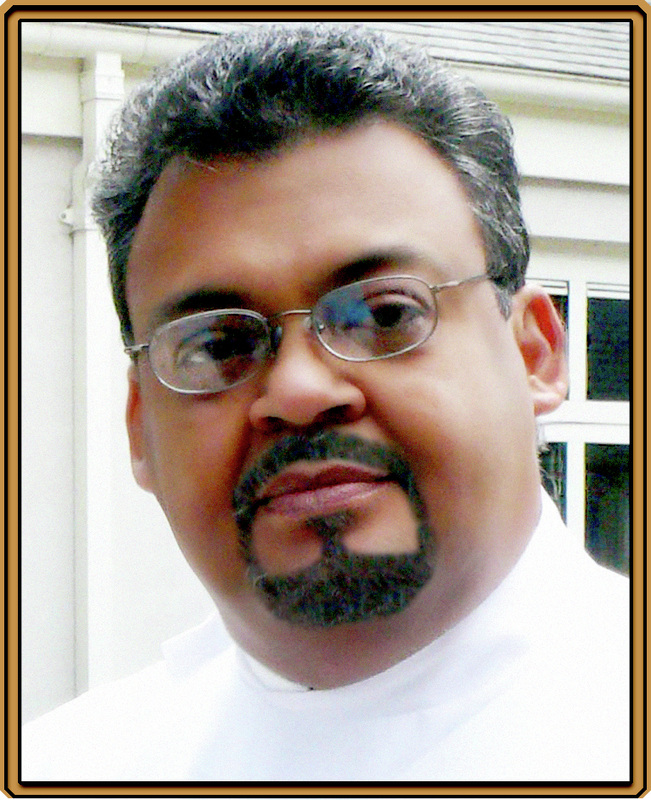
Hi, welcome to my weekly blog. I'm deacon Michel and I love blogging and the healthy exchange of constructive ideas. Now my mind has been known to wander on a million different things all at once so don't be surprised at what you find here. I often scratch my head and go 'Huh?' at my own thoughts. Feel free to leave a comment and share your thoughts with me.
DisclaimerThis blog reflects MY ongoing Christian journey: insights gained through the Holy Spirit, my experiences, my studies, my relationships. The content of this website is solely that of Deacon Michel du Chaussee, and does not represent the Archdiocese of Miami or any other entity of the Roman Catholic Church in any official capacity. Needless to say, I hope that none of my writings are contrary to the doctrines of faith and morals that are reflected in Sacred Tradition or as taught and guarded by the Magisterium of the Church or to the truths of God as revealed in the Holy Scriptures.
For I take seriously what a very wise man has often said to me: "Ordination is not license for private practice" - Msgr. A. Andersen Archives
December 2025
Categories |


RSS Feed